Travel recommendations, ideas and observations from two simple travellers

Tag: driving holidays (Page 6 of 6)

Visiting Croatia? Be sure to include Zagreb in your itinerary

We clear Croatian border control and follow our trusty GPS, acres of fields and pastures flanking us on both sides of the road. The signage is clear and we continue our leisurely pace enjoying the scenery.

We know we are close to the city as the traffic becomes heavier but are surprised when the GPS suddenly comes to life, reminding us that our turn is up ahead. Why are we surprised? We have booked to stay in the centre of the city and there is no sign of city life even though the GPS tells us we are only a couple of kilometres from our destination!

“You have arrived at your destination on your right”, says the confident voice of the GPS as we pull up in front of a small farmhouse in the middle of nowhere. The address list is retrieved from the bag. Yes, we have plugged in the right address! If all else fails, enter the GPS coordinates and this confirms our suspicions; we are still another 30 minutes from our destination!

The Croatian capital city, Zagreb, is often bypassed by travellers who are lured to the popular cities of Split and Dubrovnik and an island or two off the coast for the ultimate Croatian experience.

We second guess ourselves as we drive into the city passing row upon row of utilitarian apartment buildings from the communist era. The roads are wide and easy to navigate but there doesn’t seem to be any old-world charm in sight.

Early impressions are quickly dispelled when a turn or two later, we are in the heart of Donji Grad, Zagreb’s historic Lower Town. Our host, “call me Porchca” is waiting to guide us into the no access area and into the apartment’s private parking area. We are not disappointed by our choice of accommodation, it is a spacious and cosy apartment just metres away from cafes and restaurants and beautiful green spaces. Bustling Jelacic Square is only a few hundred metres further.

Our highlights (in no particular order):

  • Enjoying outdoor music and activity in Park Zrinjevac, a beautiful green space in the Lower Town and just metres from our apartment which has been transformed into a night festival with food stalls and live music. No crowds and very family-friendly.
Park Zrinjevac

Summer festival in Park Zrinjevac

  • Watching international performers entertain larger audiences with classical concerts and dancing on the main stage in Jelacic Square.
Jelacic Square, Zagreb, Croatia

Evening entertainment in Jelacic Square

  • A morning walk to the expansive Maksimir Park in the middle of Zagreb through the streets and local markets peeking into doorways and shops along the way. An opportunity to observe the people of Zagreb go about their daily business. We remember a lovely older woman stopping to make sure we were okay as we tried to reorientate ourselves in a marketplace. She spoke no English and us, no Croatian.
  • An afternoon exploring Gornji Grad (Upper Town), strolling along the almost empty cobblestone streets and similarly empty St Mark’s Square allowing us to appreciate the beautiful St Mark’s Church and its multi-coloured tiled roof.
St Mark's Church, St Mark's Square, Gornji Grad, Zagreb,Croatia

St Mark’s Church with its distinctive tiled roof

  • People watching around the vibrant Dolac fruit and vegetable market.
Dolac Markets, Zagreb

The wonderful array of fresh produce at the markets

20180719_104440

  • A visit to the Museum of Broken Relationships. Set in a baroque palace in the Upper Town. The brainchild of a couple who remained friends after their own relationship had broken down, the couple started collecting anonymous donations of relics from Zagreb residents whose relationships had suffered a similar fate and created this interesting concept. Sounds a little quirky but well worth a visit.

Museum of Broken Relationships, Zagreb, Croatia

For a capital city, Zagreb still maintains a small-town feel and without the usual summer crush of tourists, we were able to wander about the Lower and Upper Towns freely.

All in all our time in Zagreb was a greater pleasure than Split or Dubrovnik.

P.S. – Our recommendations:

Located in the heart of the Lower Town, Apartment Atrium Plaza was the perfect place to stay. Newly renovated, clean and spacious, within walking distance of all attractions, numerous dining options outside the secure compound and superb hosts.

Exploring the streets a short distance from Park Zrinjevac, we found a wonderful place to have dinner. Heritage serves traditional Croatian food in the form of street food. Their menu offers the opportunity to try dishes from all the regions in Croatians accompanied by local wines and craft beers.

Have a spare day to kill? Take a day trip to the charming city of Ljubljana in Slovenia only two hours away by car and about the same by train. Explore the old city known for its beautiful bridges, green spaces, lively marketplace and Romanesque architecture. Then, take a leisurely drive back to Zagreb on the back roads which wind through some of the most picturesque scenery we have seen in Europe.

20180719_103959

How to spend a day in Kotor, Montenegro

Visiting Dubrovnik and have a day to spare? Do yourself a favour and visit Kotor. Read about how to spend a day in Kotor, Montenegro on a day trip from Dubrovnik. Or even better, stay for a day or two to savour its unspoilt beauty and explore further afield.

Nestled between the mountains and the Adriatic Sea, UNESCO World Heritage-listed Kotor is picturesque and historic and an easy day trip from Dubrovnik. It’s a great way to escape the crowded Dubrovnik Old Town when cruise ships are in port.

Travelling between Croatia and Montenegro

We travelled by car between the two countries. It’s a comfortable two-hour drive each way on the highway, and remember to travel with your passport.

Croatian border security is tight, with long queues in the summer months. We left early to avoid the long queues at border control. We were lucky; it took only an hour to pass through.

The stunning Bay of Kotor

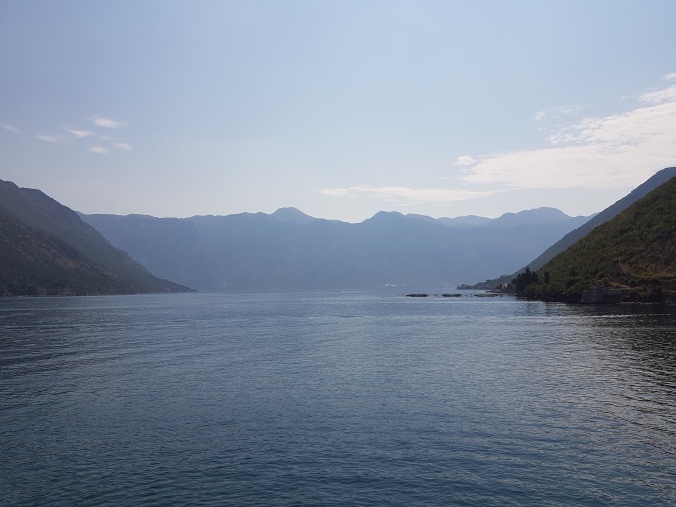
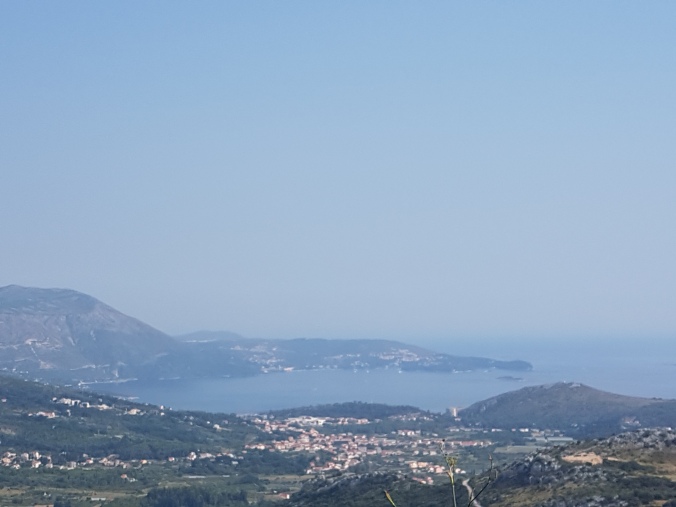
We drove past busy seaside towns and tourist parks before the road tapered into the Bay of Kotor. What a sight to greet us!

How to spend a day in Kotor,  Montenegro

The Bay of Kotor

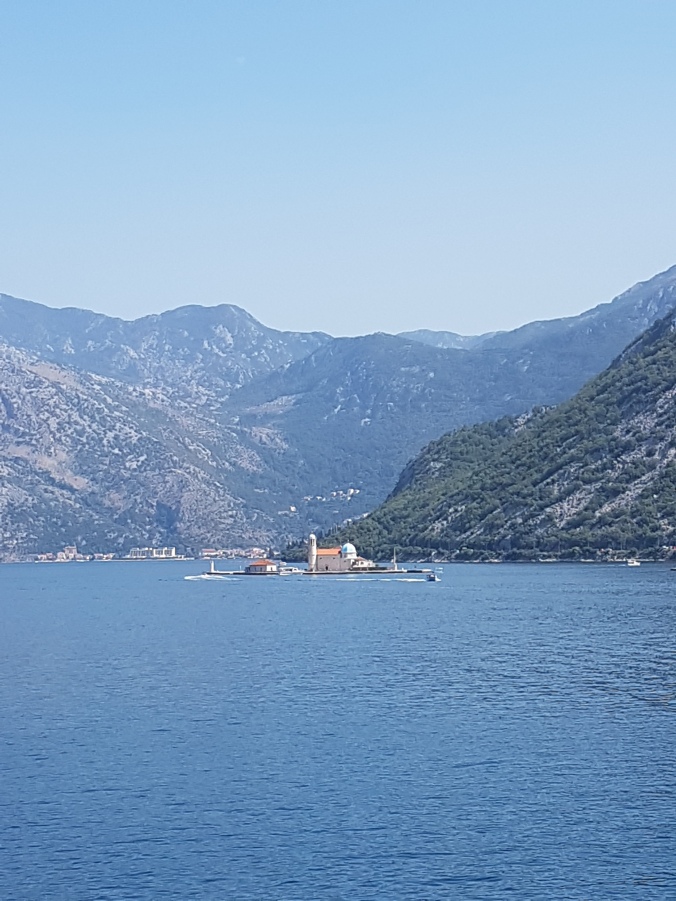
The mountain scenery toward Kotor took our breath away. We had to photograph the Church of Our Lady of the Rocks on a small islet in the bay. The camera came out.

There are numerous photo opportunities and viewpoints on the road hugging the coastline. Be prepared to take your time driving around the Bay!

Our Lady of the Rocks, Bay of Kotor
Our Lady of the Rocks sitting in the Bay of Kotor

Kotor is becoming a major tourist attraction, and traffic can be heavy if you’re arriving by car. A parking area is conveniently located on the waterfront, just a short walk from the old city.

Things to do in Kotor

Kotor Fortress

Walk to the entrance gate and look for the 13th- and 14th-century Venetian Kampana Tower and Citadel that protected the city.

Walk along the Kotor City Walls

A walk along the walls of the fortified old town, Stari Grad, gives you orientation, views of the bay and the walls stretching up the mountainside above.

Meander Stari Grad’s streets, squares and alleyways

After walking the walls, venture into the maze of streets and alleyways. You’ll meander in and out of squares, and plenty of little stores and cafes will distract you along the way.

You’ll also see lots of signs of daily life, like laundry hanging over the streets.

The streets and squares of Kotor's Stari Grad

Keep an eye out for some of the city’s landmarks too.

Kotor Clock Tower

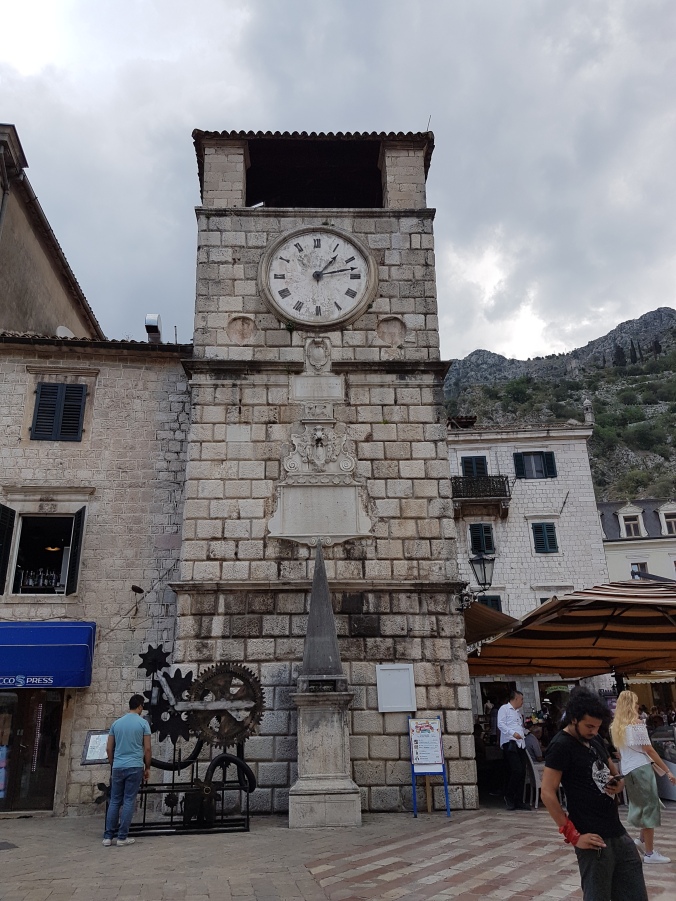
The Kotor Clock Tower is one of Stari Grad’s most notable landmarks. You’ll find it in the main square as you enter the West Gate. The original tower, built in 1602, survived the 1667 earthquake but was severely damaged in the 1979 earthquake. The reconstructed version is the one you’ll see today.

The Clock Tower, Main Square, Kotor
The historic Clock Tower in the main square, Kotor

Church of St Luke

Built in 1195, this small Serbian Orthodox Church gives visitors a real feel of the intimacy of Kotor’s Stari Grad.

Church of St Luke in Kotor, Montenegro
The quaint Church of St Luke

St Nicholas’ Church

Built on the site of an abandoned Dominican Monastery in the early 20th century, the Church of St Nicholas is a Serbian Orthodox church and one of the city’s main churches.

Cathedral of Saint Nicholas
The Cathedral of St Nicholas is one of the major churches in Kotor

Have some lunch and people-watch

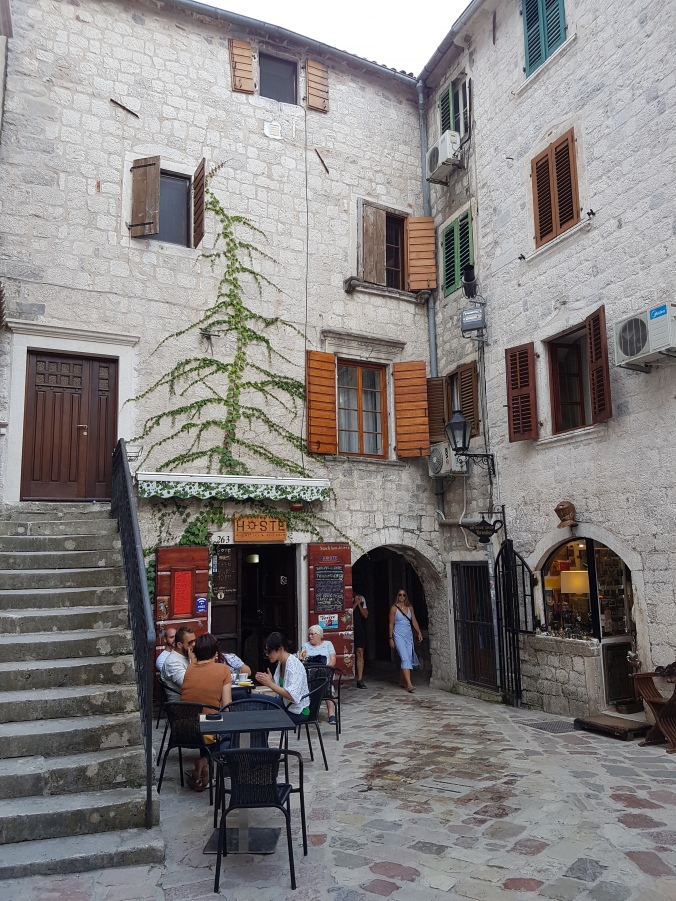
We picked a little cafe (Hoste Apertivo and Bokeria) tucked in a quiet corner of a small square for a light lunch before driving back to Dubrovnik. The cafe owner, well-versed in the queues at Croatian border controls, suggested we take the opportunity to enjoy a more pleasant drive through Bosnia and Herzegovina for our return journey, assuring us that the border crossing would be less busy. The travel time would be the same, and instead of waiting an hour or two at the Montenegro/Croatian border, we would have a chance to pass through another Balkan country and the beautiful countryside this part of the world has to offer.

Hoste Apertivi and Bokeria, Kotor
This quiet little square was the perfect spot to enjoy lunch and people-watch.

Hike up to Kotor Fortress

Sitting high above Stari Grad is Kotor Fortress/San Giovanni Castle. For a fee, you can hike the official path to the Fortress, where you’ll be treated to expansive views over the Bay.

Our conclusion

We recommend a day visit to Kotor if you have a free day in Dubrovnik. For the best experience, check to ensure your visit doesn’t coincide with a cruise ship docking in Kotor’s port.

The landscape is ever-changing, from craggy mountain roads to idyllic country lanes alongside springs and rivers, and the views are striking, as are the breathtaking views of the Bay of Kotor and beyond.

On the return journey, we there was a small queue at the border; however, we had wonderful views to enjoy while we waited.

20180726_161124

If you have time

Our Dubrovnik host also recommended visiting Budva, another medieval town on the Adriatic coast, if we had the time. We instead decided to spend an unhurried day in Kotor and its surroundings.

We’ve saved Budva and its Riviera for another visit to this stunning little country. We’ll also include a return visit to Kotor; there’s much more to see and do in this beautiful little city.

In case you’re interested

We took the driving route recommended by the proprietor of our lunch venue for our return journey to Dubrovnik, which we have had the pleasure of visiting twice. Read about our recommendations through the links below.

Why we love to drive. Are you ready to join us on the journey?

Preparations for our next travel and driving adventure are almost complete.

Setting our plan some months ago, we researched our destinations and thought we had come up with a pretty good driving route. We made sure our driving days would be leisurely and not too long. Most importantly, we must arrive at our destination before nightfall.

Over the months we have dedicated a great deal of time to read about our destinations, thought a little more about where we would like to dedicate more time (a hard decision to make as we would like to stay a little longer everywhere) and have made tweaks to our driving route. Our plan is now firm.

All this time and effort and we haven’t taken off yet! We could just sit back and enjoy the journey gazing through a coach or train window or let a tour operator determine our itinerary.

Here are 10 reasons why we choose to self-drive:

  1. We enjoy learning about where we are travelling to and when tailoring our own itinerary, we learn much more about everywhere we are going to.
  2. We decide when to leave. Unless it’s going to be a long driving day, we can still enjoy a morning walk to have a last look around the city or town before we hit the road. There is no 7am bags outside the hotel room, breakfast and on the coach at 8am for us.
  3. The backroads are more interesting to drive along than aiming to get from point A to B on a busy motorway. Just driving through little villages which lie off the beaten track can be enlightening.
  4. We get to pick where to stop for a coffee or lunch break. There are so many beautiful towns to pass through when we take the “toll-free” route. No stopping at a busy service area on the side of a motorway to line up at the restrooms, grab a quick bite to eat and gulp down a drink for us.
  5. There is always the opportunity for unplanned and spontaneous diversions. Sometimes someone we’ve met in the previous town has recommended an attraction devoid of tourists. How often we see something from the road then turn off the road to have a look.
  6. We love to turn on the radio and listen to local music. It’s an opportunity to move out of our comfort zone and listen to something new even if we can’t understand a word.
  7. We can randomly stop at the side of the road to enjoy a stunning view or taste grapes straight off the grapevine – the vineyards are often not fenced off!
  8. There’s no drifting off to sleep by the gentle roll of a coach or the clacking of a train on the tracks. We’re wide awake, there is so much to see.
  9. We have the pleasure of interacting with local people; even if it’s just to see the fear in their eyes when they realise you are unused to driving on the wrong side of the road. A smile, nod and a wave are sometimes all it takes.
  10. We get to drive a brand new car – a make which we have no intention to buy at home.

And so, for us, the first day on the road will be a little daunting. We’ll have to familiarise ourselves with driving on the “wrong” side of the road again. There is no doubt, we will be the slowest car in the “slow” lane. And, as much as we would like to, we won’t always be able to reach our destinations by the back roads.

We’ll get used to drivers honking their car horns at us! But we know that, unlike our drivers at home who honk and gesticulate loudly to show their displeasure when a driver makes an unintentional driving error, their European counterparts are just letting us know that they are coming up behind us ready to overtake. It’s not road rage, it’s part of the driving culture in Europe. Honk honk. “Hi, it’s Tony. I’m just about to overtake you on this blind corner. Wish me luck!”

And, even though we will have instructed our trusty GPS to avoid “no vehicle” and inner-city congestion charge zones, we’ll still somehow end up driving straight down The Mall towards Buckingham Palace!

Driving yourself means you can drive around the Arc de Triumph as many times as you want!

Travel is an adventure. We could just sit back and let someone else do the driving but there is no adventure in that!

We’ll be sharing our journey on Facebook and Instagram if you’d like to join us on our driving adventure. Follow us via the links above to make sure you don’t miss our “snap of the day” as we explore parts of eastern Europe.

One more thing …

If you’re travelling in Europe, look out for cars with the distinctive pink numberplate. They are travellers like us who lease their vehicle. More info on why and our preferred supplier here. We hope to see you on one of the many spectacular backroads in Europe.

Newer posts »

© 2026 Travelling Simply

Theme by Anders Noren — Up ↑