Travel recommendations, ideas and observations from two simple travellers

Tag: travel (Page 11 of 12)

How to spend a day in Kotor, Montenegro

Visiting Dubrovnik and have a day to spare? Do yourself a favour and visit Kotor. Read about how to spend a day in Kotor, Montenegro on a day trip from Dubrovnik. Or even better, stay for a day or two to savour its unspoilt beauty and explore further afield.

Nestled between the mountains and the Adriatic Sea, UNESCO World Heritage-listed Kotor is picturesque and historic and an easy day trip from Dubrovnik. It’s a great way to escape the crowded Dubrovnik Old Town when cruise ships are in port.

Travelling between Croatia and Montenegro

We travelled by car between the two countries. It’s a comfortable two-hour drive each way on the highway, and remember to travel with your passport.

Croatian border security is tight, with long queues in the summer months. We left early to avoid the long queues at border control. We were lucky; it took only an hour to pass through.

The stunning Bay of Kotor

We drove past busy seaside towns and tourist parks before the road tapered into the Bay of Kotor. What a sight to greet us!
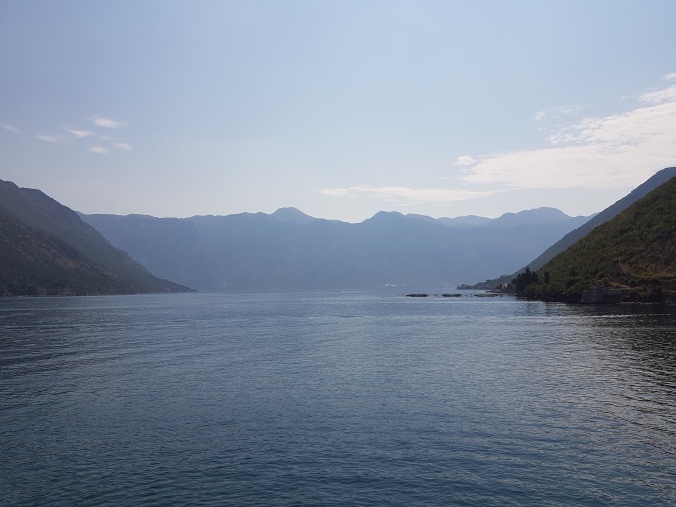
How to spend a day in Kotor,  Montenegro

The Bay of Kotor

The mountain scenery toward Kotor took our breath away. We had to photograph the Church of Our Lady of the Rocks on a small islet in the bay. The camera came out.

There are numerous photo opportunities and viewpoints on the road hugging the coastline. Be prepared to take your time driving around the Bay!
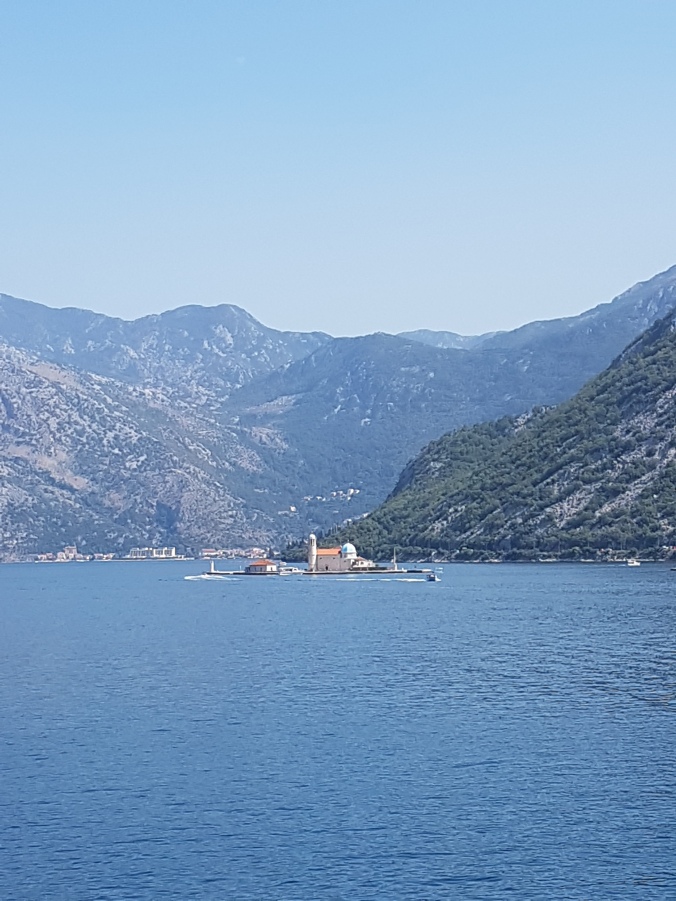
Our Lady of the Rocks, Bay of Kotor
Our Lady of the Rocks sitting in the Bay of Kotor

Kotor is becoming a major tourist attraction, and traffic can be heavy if you’re arriving by car. A parking area is conveniently located on the waterfront, just a short walk from the old city.

Things to do in Kotor

Kotor Fortress

Walk to the entrance gate and look for the 13th- and 14th-century Venetian Kampana Tower and Citadel that protected the city.

Walk along the Kotor City Walls

A walk along the walls of the fortified old town, Stari Grad, gives you orientation, views of the bay and the walls stretching up the mountainside above.

Meander Stari Grad’s streets, squares and alleyways

After walking the walls, venture into the maze of streets and alleyways. You’ll meander in and out of squares, and plenty of little stores and cafes will distract you along the way.

You’ll also see lots of signs of daily life, like laundry hanging over the streets.

The streets and squares of Kotor's Stari Grad

Keep an eye out for some of the city’s landmarks too.

Kotor Clock Tower

The Kotor Clock Tower is one of Stari Grad’s most notable landmarks. You’ll find it in the main square as you enter the West Gate. The original tower, built in 1602, survived the 1667 earthquake but was severely damaged in the 1979 earthquake. The reconstructed version is the one you’ll see today.
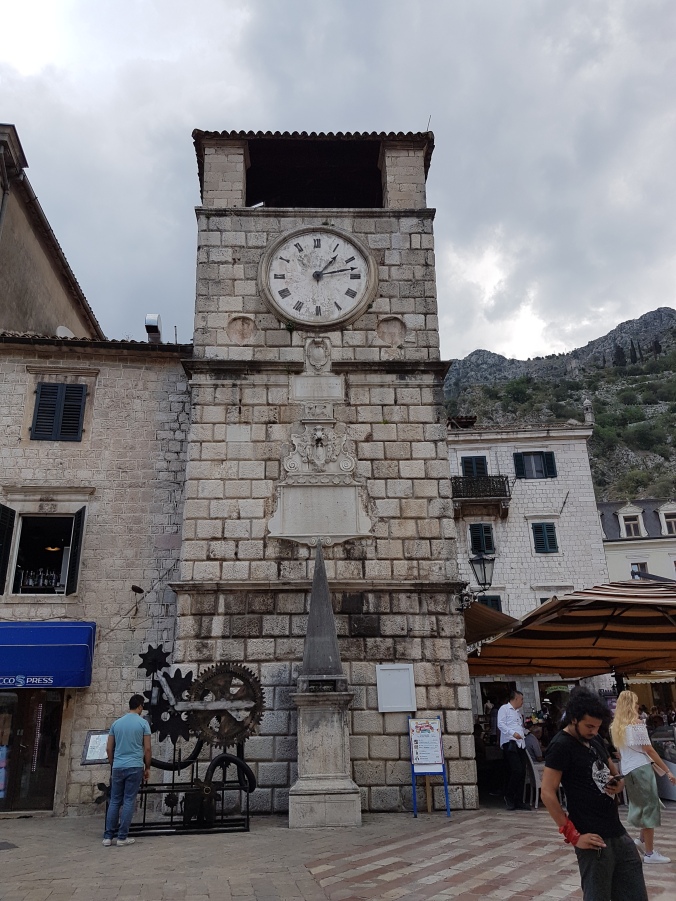
The Clock Tower, Main Square, Kotor
The historic Clock Tower in the main square, Kotor

Church of St Luke

Built in 1195, this small Serbian Orthodox Church gives visitors a real feel of the intimacy of Kotor’s Stari Grad.

Church of St Luke in Kotor, Montenegro
The quaint Church of St Luke

St Nicholas’ Church

Built on the site of an abandoned Dominican Monastery in the early 20th century, the Church of St Nicholas is a Serbian Orthodox church and one of the city’s main churches.

Cathedral of Saint Nicholas
The Cathedral of St Nicholas is one of the major churches in Kotor

Have some lunch and people-watch

We picked a little cafe (Hoste Apertivo and Bokeria) tucked in a quiet corner of a small square for a light lunch before driving back to Dubrovnik. The cafe owner, well-versed in the queues at Croatian border controls, suggested we take the opportunity to enjoy a more pleasant drive through Bosnia and Herzegovina for our return journey, assuring us that the border crossing would be less busy. The travel time would be the same, and instead of waiting an hour or two at the Montenegro/Croatian border, we would have a chance to pass through another Balkan country and the beautiful countryside this part of the world has to offer.
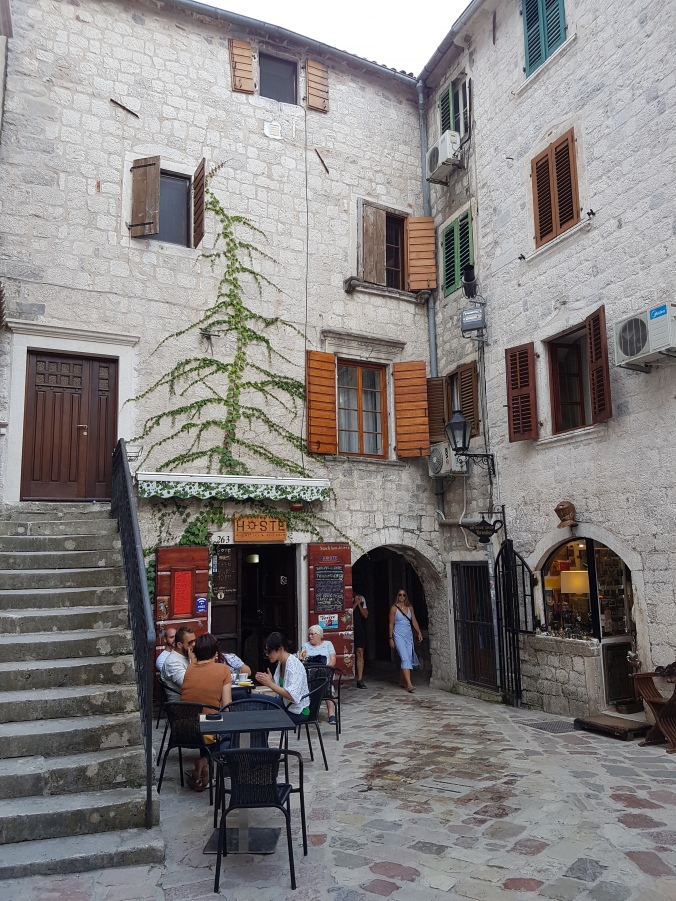
Hoste Apertivi and Bokeria, Kotor
This quiet little square was the perfect spot to enjoy lunch and people-watch.

Hike up to Kotor Fortress

Sitting high above Stari Grad is Kotor Fortress/San Giovanni Castle. For a fee, you can hike the official path to the Fortress, where you’ll be treated to expansive views over the Bay.

Our conclusion

We recommend a day visit to Kotor if you have a free day in Dubrovnik. For the best experience, check to ensure your visit doesn’t coincide with a cruise ship docking in Kotor’s port.

The landscape is ever-changing, from craggy mountain roads to idyllic country lanes alongside springs and rivers, and the views are striking, as are the breathtaking views of the Bay of Kotor and beyond.

On the return journey, we there was a small queue at the border; however, we had wonderful views to enjoy while we waited.
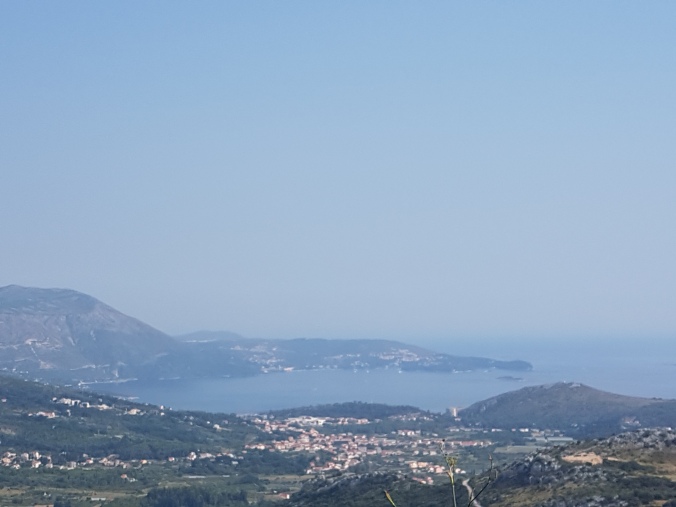
20180726_161124

If you have time

Our Dubrovnik host also recommended visiting Budva, another medieval town on the Adriatic coast, if we had the time. We instead decided to spend an unhurried day in Kotor and its surroundings.

We’ve saved Budva and its Riviera for another visit to this stunning little country. We’ll also include a return visit to Kotor; there’s much more to see and do in this beautiful little city.

In case you’re interested

We took the driving route recommended by the proprietor of our lunch venue for our return journey to Dubrovnik, which we have had the pleasure of visiting twice. Read about our recommendations through the links below.

Toast the New Year in with Champagne!

The year is drawing to a close and we feel a sense of satisfaction for accomplishing our planned travel goals with a few unplanned journeys thrown in.

As we prepare to toast in a New Year, memories of a few special days in the Champagne region of France come to mind.

After a few days of seeing the city through Parisienne eyes and wandering the rues and boulevards of Paris, we collected our car to begin our road trip.

First stop is the city of Reims. The unofficial capital of the Champagne region in the northeast of France is the perfect place to base ourselves for a day or two to explore the region.

Reims is not only the centre of the Champagne. It is home to some architectural wonders, including the imposing Notre Dame Cathedral (where French kings came to be coronated), the beautiful City Hall, the Basilica St Remi and many admirable squares.

Many of the regions Champagne houses including Taittinger and Mumm are headquartered in Reims and offer tastings at their cellar doors. Their houses are accessed through grand entrances and beautifully manicured gardens. An indication of the high esteem the French hold for champagne.

After admiring the city, we spend a couple of days exploring further afield.

Day 1 is a short 25km drive to Epernay, the home of the world’s highly acclaimed champagne houses.

On arrival, we find the streets deserted and not teeming with tourists as we had expected at the height of the European summer. It is lunchtime and everything apart from eating establishments are closed for lunch.

The Avenue de Champagne is undoubtedly one of the most beautiful streets we stroll along. Even more stunning when you have the street to yourself. We wander in and out of the grand champagne houses amidst beautiful grounds and gardens. These are the best champagne producers in the world!

We are disappointed at our first stop, the famous house of Moet and Chandon. The cellars are closed for refurbishment until after summer. We are directed a little further up the road to the House of Mercier. A partner of Moet and Chandon and owned by the LVMH group of companies, Mercier champagne is the most popular champagne in France. Eugene Mercier established his champagne house with the intention of making champagne readily available and affordable to all so that it was not only consumed for a special event but so it would become part of everyday occasions. The tour of the underground caves (18km long), on a laser-guided autonomous tram, provided an insight into champagne production, the different stages of the ageing process along with an added surprise – the remarkable basal reliefs that decorated the walls of the underground caves.

Of course, the tour would not be complete with a tasting. We enjoyed tasting the “wine for the people” complete with a lesson on how to distinguish between the different varieties. Though not connoisseurs, and now having tasted both Moet and Mercier champagnes, we agreed, both were not dissimilar!

The day ended with a leisurely drive back to Reims through the vineyards around Verzenay.

Day 2 is a beautiful summer day to take a slow 30-minute drive along the backroads among grapevines and vineyards to Hautvillers, home of another vintage champagne, Dom Perignon. The roads are quiet and we wonder why we have the roads to ourselves, there is not another vehicle in sight. It appears that everyone else is in a hurry and prefers to take the motorway.

Dom Pérignon (1638–1715) was a monk and cellar master at the Benedictine abbey in Hautvillers, a quaint French village. His tomb is in the little Abbey and remains devoid of tourist traffic.

We wander through the village and along the narrow lanes to find picnic grounds at the top of the hill. The views over vineyards and down to the little village of Cumieres and the aqua waters of the River Marne are breathtaking. This is heaven.

It is decided, we drive back to Reims via Cumieres on roads set amongst the vineyards and the gently sloping countryside through small champagne villages. The perfect end to a perfect day.

Our road trip had just started and we continued our journey through Burgundy, Provence, Bordeaux and the other wine producing regions of France. However, we will cherish our few days in Champagne.

If you are planning a visit to Paris and have a couple of spare days, take a short sojourn in the Champagne region, you will not regret it.

P.S.  A short champagne lesson:

Brut – 40% pinot noir, 45% another white wine, 15% Chardonnay, contains 9% sugar. Brut is aged for 2 years and is then ready to drink. It should not be kept for more than 3 years.

Rose – has red wine added.

Demi-Sec is much sweeter with up to 40% more sugar. It is a dessert wine.

Brut Reserve has more reserve wine added and the taste can change from year to year depending on the reserve added.

No year on the bottle – no vintage!

Do you get tired of eating out when travelling?

One of the benefits of travelling independently is being able to choose where, when and what we are going to eat. No hotel buffet breakfasts, no dashing from the tour bus into the service station on the freeway for the obligatory 15-minute break to visit the bathroom and grab a quick lunch or themed dinners to attend. Instead, we take the many opportunities to sample local delicacies by visiting small cafes and restaurants that we come across during a day of wandering or eateries recommended by our apartment hosts.

Sometimes, when we are travelling for a long time, we tire of eating out. We crave for a simple meal without menus or waiters. Our solution is easy and always enjoyable and is easier when travelling in warmer climes.

Our favourite stops on our early morning walks are the vibrant daily markets found nearly everywhere we travel selling fresh fruit, vegetables, cheeses, poultry, meats and fish, freshly prepared meals.

In many countries, a visit to markets to purchase fresh ingredients for the days’ meals is an integral part of daily life. It’s lovely to see what the local people are buying and selling. The markets are more than that though. They play an important role in the community’s social life. Cast your eyes around any marketplace and you will see neighbours stopping to chat with each other, sitting down for a leisurely coffee together or simply sharing a joke with a stall holder.

For us, visits to the markets are made more exciting when we decide that it is time to take a break from eating in restaurants. We can pretend for a short moment in time that we are part of this community. We are no longer bystanders or tourists taking snaps of mouth-watering food. We are on a mission like everyone else. What are we having for dinner tonight?

We’ll take a stroll around the stalls to decide (so much to choose from!) stopping at the various stalls to ask advice or taste test those local delicacies. When we’re ready, we take another turn around to make our purchases. We’ll select a good bottle of local wine, buy a selection of cheeses, olives, bread, fruits and other accompaniments.

The next step is critical. Where are we going to enjoy our goodies?

Sometimes, our apartment will have a balcony where we can sit and enjoy an al fresco meal. However, the best meals are when we join the city dwellers who take their dinner out to the local park for a picnic.

Relaxing over our meal, often in front of a beautiful monument, listening to a small group of musicians or simply doing a little people watching is one most rewarding parts of our travels.

Travel’s a picnic! We recommend you try it on your next travel adventure.

See the hidden treasures just outside of Rome

It was another bright, sunny day as we drove up to Hadrian’s Villa (Villa Adriana) just outside of Tivoli. We had spent a couple of weeks walking the tracks between the villages in the Cinque Terre, wandering the streets of Florence and Sienna, and roaming the Tuscan countryside. The drive, surrounded by endless fields of sunflowers through Umbria and into Lazio was beautiful, and Tivoli was our final stop before reaching Rome.

With parking restricted at the entrance, we parked in a neighbouring suburban street, found a little café for lunch in preparation for an afternoon wandering through the ruins of the UNESCO World Heritage site.

We were delighted to find there were no queues at the entrance. And, upon entering, only a few people inside the complex.

Hadrian’s Villa is a large complex of buildings, gardens, pools and fountains, dating back to 118AD. Emperor Hadrian built this rural retreat as his summer getaway from Rome and today, much of the site remains unexcavated. The unearthed ruins though, leave it to the imagination about how spectacular buildings and grounds of this original Villa were!

Entranced by the beauty of the Villa, we hadn’t noticed the dark clouds gather. Suddenly there’s a feeling of eeriness around us. Thunder starts to rumble and flashes of lightning rapidly crack across the sky. With more to see, we don’t let this deter us and carry on admiring willing the skies to clear – we still have much more to see.

The Gods take pity and it is not until we reach the Museum that it starts to pour with rain. The model recreation indoors gives us an insight into Emperor Hadrian’s appreciation of architectural styles and how beautiful the Villa originally was.

It was time to leave and with no sign of the heavy rain subsiding, the decision was made. He gallantly sprinted to find our car while I took cover.

And, so it was that we continued our short drive into Tivoli to find our little B&B in the small piazza just outside the amazing Villa D’Este. We will have a couple of hours to explore the famous gardens before dark.

With light rain still falling by the time we unpack and settle, we decide that a tour of the Villa apartments would be best before exploring the gardens. We are not disappointed, the apartments reveal stunning frescoes and stairways with glimpses over the gardens and beyond through the windows. This villa was the home of the very wealthy Cardinal Ippolito d’Este.

The grand finale is the amazing gardens, fountains and waterfalls – indescribable. The opulence of times past is difficult to understand these days, however, we are grateful that the Villa has been well preserved for us to enjoy and imagine times past.

Hadrian’s Villa is located outside of Tivoli and while we travelled by car, we understand there is a bus service from Tivoli which delivers you very close to the entrance (pop into the Tourist Office om Piazza Garibaldi for details).

Just over 20km from Rome, Tivoli can be explored on a day trip. However, we recommend that you stay at least one night in this small town to be able to explore the main attractions at a leisurely pace. Or, stay longer to use the town as a base as you explore the region of Lazio. Either way, do not miss the opportunity to go off the tourist track and pay a visit.

P.S. If you decide to stay in Tivoli, we can recommend staying at the lovely B&B Villa D’Este situated right next to the Villa D’Este. Our host, Fabio was very polite and accommodating providing us with a delicious homemade breakfast on the rooftop terrace. Make sure you request a room overlooking the piazza. They also provide complimentary parking in a car park close by. There are plenty of unique restaurants and cafes close by.

Why you will love travelling in Europe in the summer if you enjoy music and culture!

Truly getting to know a new country includes meeting new people, sampling new food, visiting the sights and treasures unique and dear to that country and immersing ourselves in their art and culture.

In a tour group, the itinerary is sure to include pre-organised events to showcase the country’s uniqueness – a traditional performance over a meal of local dishes, a private concert in a castle for your group, or a guided visit to the theatre or art gallery. We’ve attended and enjoyed many during our travels.

We prefer to travel independently these days,  by-pass the ticket vendors selling tickets to the opera or a music show, and instead join the locals in their town’s piazzas, plazas and placas or sit in on a classical concert in a historic building where we can just wander in to take a seat.

 A European Town square is a centre for gathering – a place to meet, eat, drink and enjoy entertainment. In winter, some will transform into mesmerising night markets but it is in summer where these town squares are the most vibrant.

Preferring to travel to Europe during their summer, we have had the opportunity to enjoy this vibrancy. In almost every major town or city, stages will appear and buskers will hold their position around town squares.

Performances are varied, but all are professional and first class in quality. Anyone can attend, entrance is free, there are no queues, and you don’t have to dress up! Often, a number of these performances are on at the same time and you can wander between them.

We’ve stumbled unexpectedly across many a performance:

  1. On an evening stroll in Madrid, we came across a Big Band concert in Plaza Mayor and were entertained for almost two hours.
  2. On an afternoon walk down La Ramblas in Barcelona, we veered into a square and into the middle of a human tower competition.
  3. Instead of joining the others in the tourist hub of Monastiraki in Athens, we joined locals at an outdoor music concert featuring traditional Greek music and performances.
  4. As tourists queued to enter the opera in Vienna, we walked across the road to join the large crowd at the annual film festival in front of the Town Hall.
  5. Enjoyed a professional fashion show in the enchanting hilltop town of Paola on our drive back to Rome from Sicily.
  6. On the Old City walls of Treviso, we enjoyed two nights of incredible entertainment, Nina Zilli who represented Italy in the 2012 Eurovision performed one night and the Beuna Vista Social Club performed on the next evening. The atmosphere was electric!
  7. Wandering along 3rd Street Promenade in Santa Monica, we stopped to listen to three brothers showcasing their music right at the end of the street. They are outstanding musicians who tour the US performing at schools and small venues and enjoy busking so much that their mother drives them the one hour to come down to Santa Monica every Saturday and then waits to take them home again.
  8. Staying a few days in the Tuscan town of Arezzo, we enjoyed the annual jousting competition held every night complete with a medieval parade through the streets of the town.
  9. In Seville, we wandered into an outdoor courtyard in a small Palais to join a small audience and listened to a spectacular classical piano concert.
  10. Recently, in Prague all the seats were taken by the time we arrived in Old Town Square, so we joined locals and other travellers like ourselves to sit on the kerbside to enjoy an evening of jazz.

A recommendation, next time you are travelling in Europe during the summer, take a peek in the town square or if like us, you decide on using apartment accommodation, ask your host.

« Older posts Newer posts »

© 2026 Travelling Simply

Theme by Anders Noren — Up ↑